
Why this matters
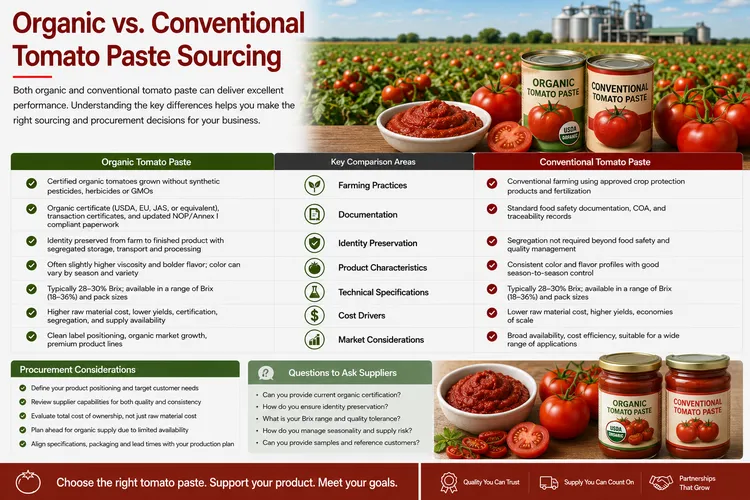
The specification is the commercial translation of finished-product performance. Organic and conventional tomato paste can both meet demanding technical requirements, but they may involve different documentation, sourcing, segregation and procurement considerations.
Normalize technical comparisons before approving a source. In a tomato-based formulation, an apparently small change in solids, finish, viscosity or process history can alter yield, pumping behavior, sensory profile and the amount of water or thickener required.
Start with the finished-product requirement
Organic status should be defined by the commercial program rather than treated as a technical characteristic of tomato paste itself. First determine whether the finished product needs an organic ingredient program and which documentation or identity-preservation expectations apply.
Once that requirement is clear, compare organic and conventional candidates using the same core technical criteria so differences in certification status are not confused with differences in formulation performance.
Ingredient selection
Start with solids/Brix and process type, then add consistency, color, pH/acidity, finish, microbiology, package and lot documentation. For this topic, a logical first comparison is organic and conventional tomato paste with similar concentration and functional characteristics.
Treat that as a formulation hypothesis rather than a fixed rule. The preferred source is the ingredient that meets the finished-product target, certification requirements, supply expectations and total cost objectives.
Keep the technical specification comparable
Organic and conventional paste should be compared on equivalent technical targets wherever possible. If one candidate has a different Brix, viscosity or finish, the formulation effect may come from that technical difference rather than from the sourcing program itself.
- Product type and process
- Brix or total solids
- Viscosity or Bostwick
- pH and acidity
- Color
- Finish or screen specification
- Sensory profile
- Microbiological requirements
- Pack format and net weight
Organic documentation
Organic sourcing normally adds a documentation layer to the standard tomato paste approval process. Confirm which current certificates and transaction or product records are required for the intended commercial program.
Documentation should remain linked to the supplier, product, relevant manufacturing operation and lot where appropriate. Avoid treating a general supplier statement as a substitute for the records required by the buyer's own organic program.
Identity preservation
Where a processor handles both organic and conventional material, ask how organic identity is preserved through processing, filling, storage and shipment. Product coding and documentation should allow the buyer to distinguish the approved organic program from conventional production.
Similar controls may also be needed internally after receiving so warehouse and production teams can maintain the correct product identity through manufacturing.
Traceability
Lot traceability matters for both conventional and organic tomato paste, but organic programs may require additional attention to the chain connecting certified supply, processing and finished ingredient records.
Confirm that supplier lot codes, COAs, organic documentation and shipment records can be linked clearly enough for receiving and quality teams to verify the material supplied.
Normalize tomato solids
Supplier samples should not automatically be compared at identical ingredient percentages. If one paste has a higher concentration, it contributes more tomato solids per kilogram and can appear stronger in body, color and flavor.
Normalize to equivalent tomato solids before making the first technical comparison. This also provides a better foundation for comparing usable yield and total formula economics.
Compare sensory performance
Organic status alone does not define tomato flavor. Compare aroma, sweetness, acidity balance, cooked notes, bitterness, color and overall tomato character using controlled sample preparation.
When sensory performance matters strongly to the finished product, include an approved control made with the current tomato paste so the technical team can distinguish supplier variation from normal process variation.
Understand cost drivers
Organic and conventional tomato paste programs can have different commercial cost structures. The buyer should evaluate more than the quoted price per kilogram and understand how concentration, packaging, certification requirements and supply availability affect the final delivered cost.
Compare offers on landed usable tomato solids rather than unit price alone. A different Brix or pack efficiency can change the amount of ingredient, freight and storage needed to produce the same finished-product volume.
Consider supply availability
Organic supply may operate within a different production and contracting environment from conventional supply. Forecast annual demand early and ask suppliers about production timing, available volume, pack formats and normal planning lead times.
For critical programs, evaluate alternate approved sources before they are urgently needed. Technical qualification, organic-document review and commercial planning are easier to complete before a supply interruption.
Packaging and warehouse handling
Compare aseptic drums, bins or other available pack formats on actual net weight, plant handling, product recovery and warehouse compatibility. Organic and conventional products should remain clearly identifiable throughout storage.
If both versions are held at the same facility, clear lot coding and inventory controls can help prevent unintended material selection during production.
Practical trial method
Run candidate ingredients in the actual formula at equal tomato solids whenever possible. Record batch conditions so sensory, viscosity, yield and process comparisons remain meaningful.
- Define the finished-product technical target and confirm whether organic status is required.
- Collect current specifications, COAs and representative samples from each candidate source.
- For organic candidates, collect the documentation needed for the intended organic sourcing program.
- Normalize tomato solids or concentration before comparing usage rates.
- Run a controlled bench or pilot batch using the real addition order and process conditions.
- Measure relevant attributes such as Brix/solids, pH, viscosity or Bostwick, color, yield and sensory profile.
- Record any water, thickener, seasoning or process adjustments required by each candidate.
- Repeat after the relevant thermal process and storage condition.
- Compare technical performance together with documentation, packaging, lead time, landed usable solids and supply continuity.
- Document the approved supplier, specification, organic or conventional status and change-control triggers.
Questions to ask the supplier
- What product definition, process and crop/origin apply to this lot?
- What Brix, viscosity, color, pH and finish specifications apply?
- Which parameters are guaranteed versus typical?
- Is the product offered as organic, conventional or both?
- Which current organic documents are available for the program?
- How is organic identity preserved through processing, storage and shipment?
- How are organic and conventional lots distinguished?
- What is the pack configuration, net weight and storage guidance?
- Which food-safety and quality documents are available?
- How are lots identified and traced?
- What production lead time and seasonal availability should buyers plan around?
- What changes require customer notification?
Document the approved sourcing program
Final approval should identify more than the supplier name. Record the approved product, specification, manufacturing source where relevant, pack format and whether the approval applies to organic, conventional or both programs.
Keep certification records and technical approval records connected so purchasing, quality and production teams are working from the same sourcing baseline.
Manage supplier changes carefully
A change in processing site, crop origin, product specification, certification status or packaging may require additional review. Define these notification triggers before routine purchasing begins.
If an organic source changes, verify both technical equivalence and the documentation needed to maintain the intended organic program before the changed material enters production.