
Better tomatoes start with better questions.
We prioritize sourcing programs that can demonstrate responsible farming, efficient processing, traceability and practical improvements across the supply chain. Rather than relying on broad sustainability language, we focus on the evidence relevant to a specific product, processor, origin and customer requirement.
Measure what matters.
We prefer specific evidence over broad claims. The exact data available varies by farm, processor, origin and program, so our role is to ask for relevant documentation, understand how it applies to the supplied product and match that evidence to customer priorities.
Water
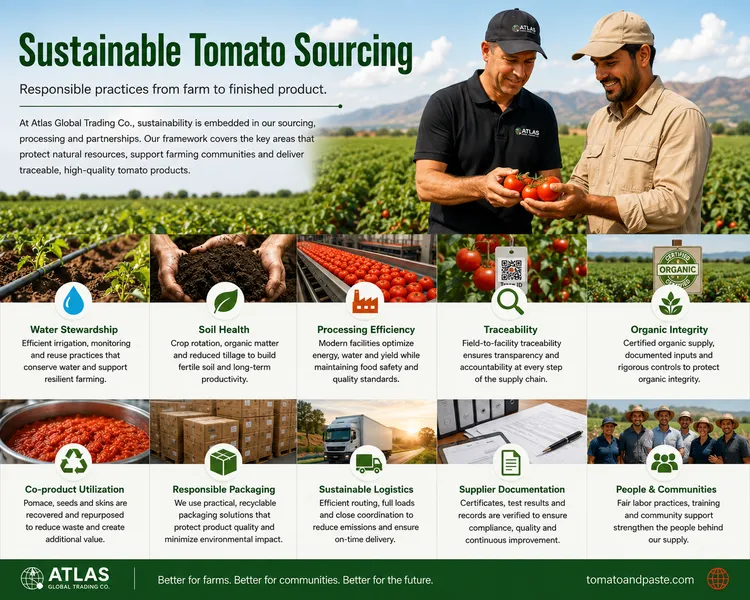
Irrigation strategy, water productivity, factory water management and local watershed context. Depending on the program, review may include irrigation methods, water-use monitoring, reuse initiatives and processor-level efforts to reduce water consumed per unit of output.
Soil & crop
Rotation, soil health, nutrient management, pest management and farm-level traceability. Agricultural practices can be evaluated in the context of regional growing conditions, crop productivity and the controls used to manage inputs responsibly.
Processing efficiency
Energy, yield, heat recovery, wastewater, maintenance and process optimization. Efficient conversion of fresh tomatoes into paste, puree and other ingredients can reduce losses while improving the use of energy, water and processing capacity.
Co-products
Responsible pathways for pomace, skins, seeds and other processing streams where suitable. Potential uses may include feed, fiber, ingredient or extraction applications when composition, safety, economics and local infrastructure support them.
Packaging
Pack-to-product efficiency, liner and drum choices, palletization and avoidable packaging loss. The appropriate approach depends on the ingredient, shelf-life requirements, food-safety controls, transportation method and customer handling system.
Logistics
Concentration, payload, origin strategy and routing that reduce unnecessary movement per usable solid. Higher-solids formats, efficient loading and sensible origin selection can improve freight efficiency when they also fit the customer's production requirements.
Certification is a chain of custody.
For organic projects, farm status alone is not enough. Processor scope, handling, storage, lot identity and the documentation required by the destination market must remain aligned. The objective is to preserve documented organic status throughout the commercial chain rather than treating certification as a single certificate checked in isolation.
Requirements can differ by destination and customer program, so organic status, applicable certification scope and shipment documentation should be agreed before commercial execution.
What we ask for
- Current certification documents and applicable product scope
- Lot and transaction documentation where applicable
- Ingredient and processing-aid review
- Segregation and identity-preservation controls
- Traceability from inbound raw material to finished shipment
- Storage and handling controls relevant to organic integrity
- Destination-market documentation agreed before shipment
From sustainability claims to usable evidence.
Sustainability requirements are most useful when translated into specific questions that a supplier or processor can answer. The scope of review can then be scaled to the product, purchasing volume, customer policy and level of supply-chain risk.
Define the requirement
Start with the issues that matter to the purchasing program. These may include organic certification, irrigation practices, traceability, energy management, waste reduction, social requirements or specific customer sustainability policies.
Review the evidence
Supporting material may include certificates, audit reports, traceability records, processor policies, operational data or customer-specific questionnaires. Not every supplier will maintain the same data set, so evidence should be assessed in context.
Confirm the supplied program
A corporate policy does not automatically establish the status of every shipment. Where a claim matters commercially, the relevant product, facility, certification scope, lot and documentation should be confirmed before approval or shipment.