
Product overview
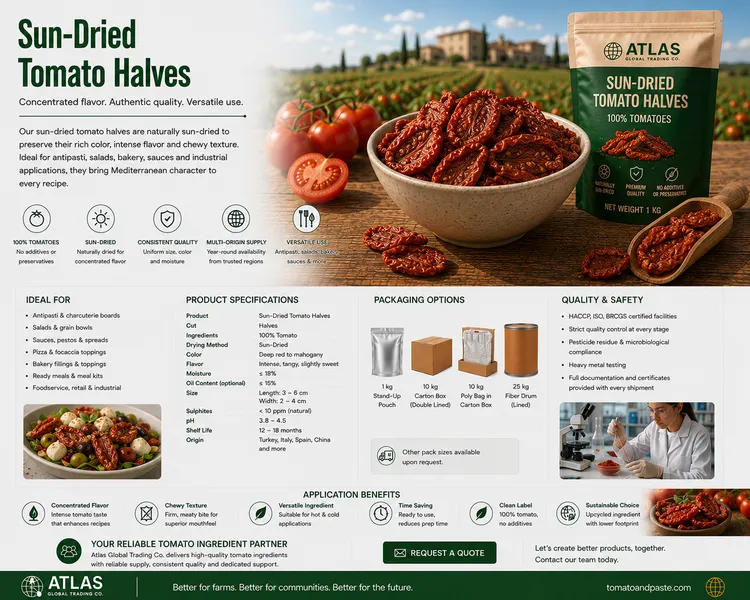
Sun-dried tomato halves are produced by cutting tomatoes and reducing their moisture to create a concentrated dried tomato ingredient with pronounced flavor, color and texture. The half format preserves a recognizable tomato shape and gives foodservice operators and industrial processors flexibility to use the pieces whole or cut them further.
They can be used directly in antipasti and prepared-food applications or processed into strips, dice, fillings, sauces and other tomato-based components. Their concentrated flavor means relatively small inclusion levels can have a noticeable sensory effect, depending on the finished formulation.
Atlas Global Trading Co. sources tomato ingredients through a multi-origin network of farms, processors and supply partners. We match the ingredient to the customer’s finished-product performance, commercial pack format, technical documentation, destination and supply requirements.
Specification focus
Moisture is one of the most important purchasing parameters because it influences texture, shelf stability and handling. A lower-moisture product may have a firmer, chewier texture, while a higher-moisture program may provide a softer bite. Exact ranges should be confirmed against the intended application.
Salt level should also be specified where it affects flavor, sodium targets or further formulation. Depending on the processor and product program, sun-dried tomatoes may be supplied with different salt levels, so buyers should avoid assuming a universal profile.
Programs may also differ in preservation approach, including sulphured or non-sulphured options where applicable. Buyers with clean-label, ingredient-declaration or market-specific additive requirements should state these clearly during sourcing.
Color, size, piece integrity and defect tolerances may be commercially important when the tomatoes remain visible in the finished product. Mold limits, microbiological criteria and other safety parameters should also be defined in the approved specification and supporting lot documentation.
Texture and rehydration
Sun-dried tomato halves can change texture when exposed to moisture, oil, sauces or thermal processing. In antipasti systems they may be used after conditioning or marination, while in bakery and prepared meals they can absorb moisture from the surrounding product during processing or storage.
Manufacturers planning to cut, blend or cook the halves should evaluate how the selected moisture level affects cutting efficiency, breakage, rehydration and final bite. Bench or pilot trials can help establish the best balance between handling and finished-product texture.
Typical applications
- Antipasti and marinated tomato preparations
- Foodservice and culinary applications
- Breads, focaccia and savory bakery products
- Salads and chilled prepared foods
- Further cutting into julienne or diced formats
- Sauces, fillings and ready meals
Further processing
The half format is often useful when the buyer wants flexibility for downstream cutting. Depending on the manufacturing program, the product can be converted into strips, diced pieces or smaller inclusions for sauces, fillings and mixed prepared foods.
Where automated cutting equipment is used, consistency of size, moisture and texture can influence throughput and yield. These factors should be considered alongside headline ingredient price when comparing alternative supply programs.
Packaging and handling
Packaging should protect the dried tomatoes from contamination, excessive moisture pickup and physical damage. Depending on the processor, commercial supply may use lined cartons, bags, pouches, foodservice packs or other configurations suitable for the product.
Receiving teams should inspect packaging integrity, lot identification, pallet condition and storage instructions. Shelf life and warehouse conditions can vary with moisture level and preservation method, so the approved technical documentation should always control storage and handling decisions.
Organic and conventional programs
Where organic supply is requested, we confirm the product’s certification scope and supporting documentation for the selected origin and supply lot. Processor certification, any permitted processing inputs and destination-market organic requirements should remain aligned throughout the supply program.
Conventional programs can be optimized around moisture, salt, preservation system, color, piece quality, economics, origin and continuity of supply. Exact parameters and commercial availability are confirmed against the selected processor and crop program.