
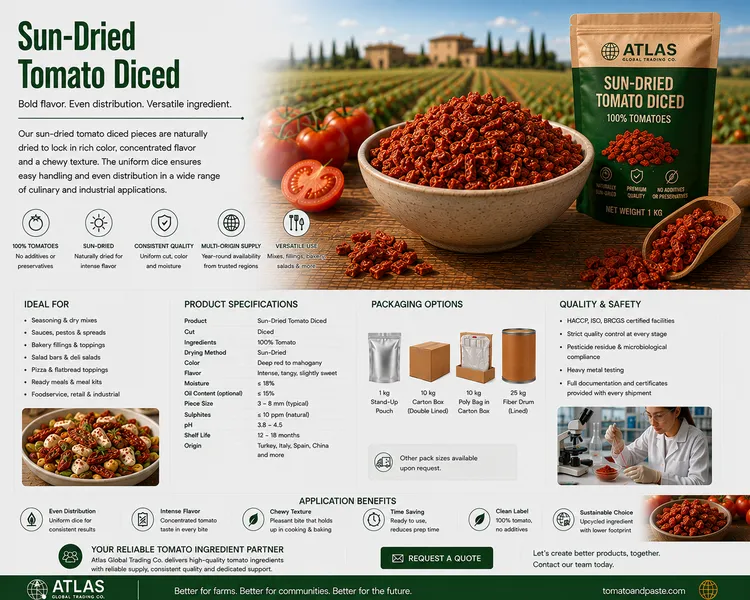
Product overview
Diced sun-dried tomatoes are dried tomato pieces cut into a relatively uniform cube or small-piece format for efficient distribution through mixed formulations. Compared with halves or julienne cuts, the diced format can provide more consistent portioning and reduce downstream cutting requirements.
The ingredient can contribute concentrated tomato flavor, color, texture and visible tomato identity to fillings, bakery products, salads, meal kits, sauces and ready-to-eat foods. Exact performance depends on cut size, moisture, preservation method and the processing conditions used in the finished application.
Atlas Global Trading Co. sources tomato ingredients through a multi-origin network of farms, processors and supply partners. We match the ingredient to the customer’s finished-product performance, commercial pack format, technical documentation, destination and supply requirements.
Specification focus
Cube size or dice dimensions are among the primary purchasing parameters. Smaller pieces can distribute more uniformly through fillings, doughs and sauces, while larger dice provide a more visible inclusion and stronger piece identity in the finished product.
Buyers may also define tolerances for fines, broken pieces and oversized material. Consistent particle size can support more predictable dosing, appearance and texture, particularly in automated mixing or portioning systems.
Moisture should be selected according to the desired bite and processing method. Lower-moisture dice can be firmer and chewier, while products with more retained moisture may soften more rapidly during mixing, cooking or storage.
Salt level and preservation system should also be confirmed. Depending on the processor and product program, dried tomato products may differ in salt addition or preservation approach. Buyers with sodium, ingredient-declaration or clean-label requirements should state these parameters during sourcing.
Rehydration and processing behavior
Diced sun-dried tomatoes can absorb moisture from sauces, fillings, doughs or other surrounding ingredients. The rate and degree of softening depend on particle size, moisture level, water availability, temperature and processing time.
In meal kits or instant applications, rehydration may need to occur relatively quickly. In bakery, fillings or prepared meals, the goal may instead be to retain a defined piece and chewy texture after cooking. Testing under actual process conditions helps confirm the most suitable dice size and moisture range.
Distribution in formulations
The diced format is particularly useful where tomato pieces should be distributed evenly throughout a formulation rather than concentrated in larger inclusions. This can support more consistent portion appearance and flavor delivery across individual servings.
Manufacturers should consider the amount of mechanical shear applied during mixing. Excessive mixing may increase breakage and fines, particularly in softer or higher-moisture programs, so ingredient selection should reflect the customer's process.
Typical applications
- Fillings and savory stuffings
- Breads and savory bakery products
- Salads and chilled prepared foods
- Meal kits and ready meals
- Sauces, dips and culinary preparations
- Rice, grain and pasta-based foods
Packaging and handling
Packaging should protect diced sun-dried tomatoes from contamination, unwanted moisture pickup and excessive physical damage. Commercial programs may use lined cartons, industrial bags, pouches, foodservice packs or other formats depending on processor capability.
Receiving teams may review package integrity, lot identification, storage instructions and shelf-life documentation before use. Storage requirements should follow the current product specification, particularly where moisture or preservation method affects shelf stability.
Organic and conventional programs
Where organic supply is requested, we confirm the product’s certification scope and supporting documentation for the selected origin and supply lot. Processor certification, permitted processing inputs and destination-market organic requirements should remain aligned throughout the supply program.
Conventional programs can be optimized around dice size, moisture, texture, salt or preservation system, economics, origin and continuity of supply. Exact technical parameters and commercial availability are confirmed against the selected processor and product program.