
Product overview
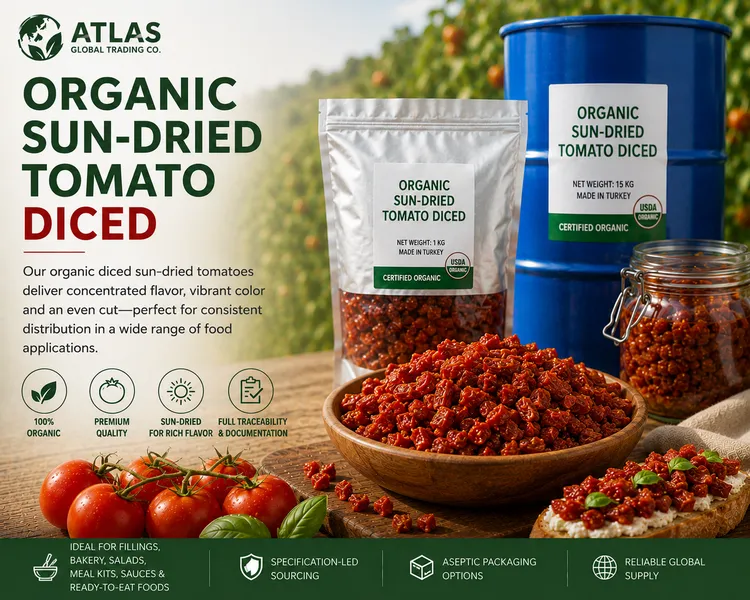
Organic sun-dried tomato diced consists of dried tomato pieces cut into relatively small cubes or irregular dice for convenient incorporation into commercial food formulations. The format can provide concentrated tomato flavor, color and recognizable tomato texture while distributing more evenly than larger halves or julienne strips.
Diced material can be particularly useful where manufacturers need controlled piece size across fillings, bakery mixes, salads, prepared meals or sauces. The smaller format can also simplify dosing and reduce preparation compared with cutting larger dried tomato pieces in-house.
Atlas Global Trading Co. sources tomato ingredients through a multi-origin network of farms, processors and supply partners. We match the ingredient to the customer’s required organic certification, dice dimensions, moisture and texture, commercial pack format, technical documentation, destination and supply program.
Specification focus
Dice dimensions are a central purchasing parameter because cut size influences visual appearance, mouthfeel, blending behavior and distribution through the finished product. Buyers may also specify acceptable tolerances for undersized pieces, fines, broken material or oversized dice.
Moisture influences both texture and processing behavior. Lower-moisture pieces may remain firmer and chewier, while higher-moisture programs can soften more quickly when incorporated into fillings, sauces or prepared meals.
Salt level and preservation system should be confirmed for the selected program. Depending on processor capability and destination requirements, buyers may need to specify salt expectations, preservation preferences and any ingredient-declaration or organic-label constraints.
Color, flavor, piece integrity and microbiological criteria can also be included in the approved specification. Where appearance matters, samples can help confirm whether the selected dice profile is suitable for the final application.
Piece distribution and consistency
One advantage of the diced format is more even distribution through fillings, doughs, grain mixes and prepared-food systems. Smaller, relatively uniform pieces can help reduce large localized concentrations of tomato and support more predictable portioning.
Manufacturers using automated dosing or mixing equipment may want to evaluate bulk handling, piece flow and segregation. The relationship between dice size, moisture and fines can influence how consistently the material moves through hoppers, feeders or dry-blending systems.
Texture and rehydration behavior
Diced sun-dried tomatoes absorb moisture from the surrounding food system. The speed and extent of softening depend on incoming moisture, piece dimensions, temperature, available water, contact time and the composition of the finished product.
In salads or chilled foods, buyers may want the dice to retain a defined chew and visible shape. In fillings, sauces or ready meals, a softer texture may be preferred after hydration and thermal processing.
Bench or pilot trials can help confirm the final texture and piece integrity before approval of a new source.
Processing and piece integrity
Mechanical mixing can break dried tomato pieces, especially after they begin to hydrate. Where visible dice are important, the addition point, mixer speed and total processing time should be considered alongside the incoming product specification.
For formulations that undergo cooking, baking or retort-style thermal treatment, customers should evaluate the dice after the complete process rather than only in the dry incoming state.
Typical applications
- Bakery and savory fillings
- Breads, focaccia and dough systems
- Salads and chilled prepared foods
- Meal kits and ready-to-eat products
- Sauces, dips and culinary preparations
- Rice, grain and pasta-based prepared foods
Packaging and storage
Organic sun-dried tomato diced may be supplied in lined cartons, industrial bags, pouches or foodservice formats depending on processor capability and the commercial program. Packaging should protect the product from contamination, unwanted moisture pickup and excessive physical damage.
Receiving teams should verify package integrity, lot identification, storage conditions and shelf-life documentation. Once opened, exposure to humidity should be minimized and the product should be handled according to the current approved specification.
Organic program controls
Organic certification is a core part of the product specification. We confirm certification scope and supporting records for the selected processor, origin and supply lot, including relevant chain-of-custody documentation where applicable.
Buyers should state the destination market and any customer-specific organic requirements during inquiry. Where salt, preservatives or other processing inputs are relevant, their compatibility with the intended organic program and final ingredient declaration should also be reviewed.
Final organic claims should remain aligned with the approved ingredient, processor certification, supply documentation and destination-market requirements.